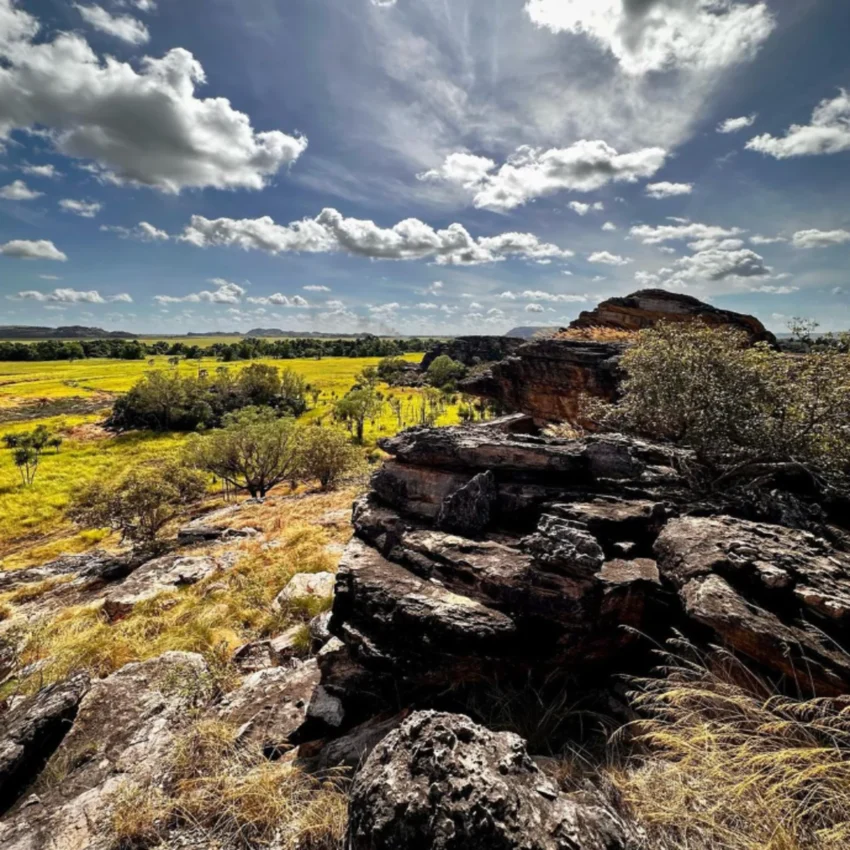
In addition to the termite mounds, which were excellent in principle but of little interest to contemplate, we wanted to see something more valuable and unique that has survived in Australia – Aboriginal rock paintings. But we still went to look at the drawings. They just climbed because getting to them takes more work.
Witnessing the Tenacity of Elderly Travelers
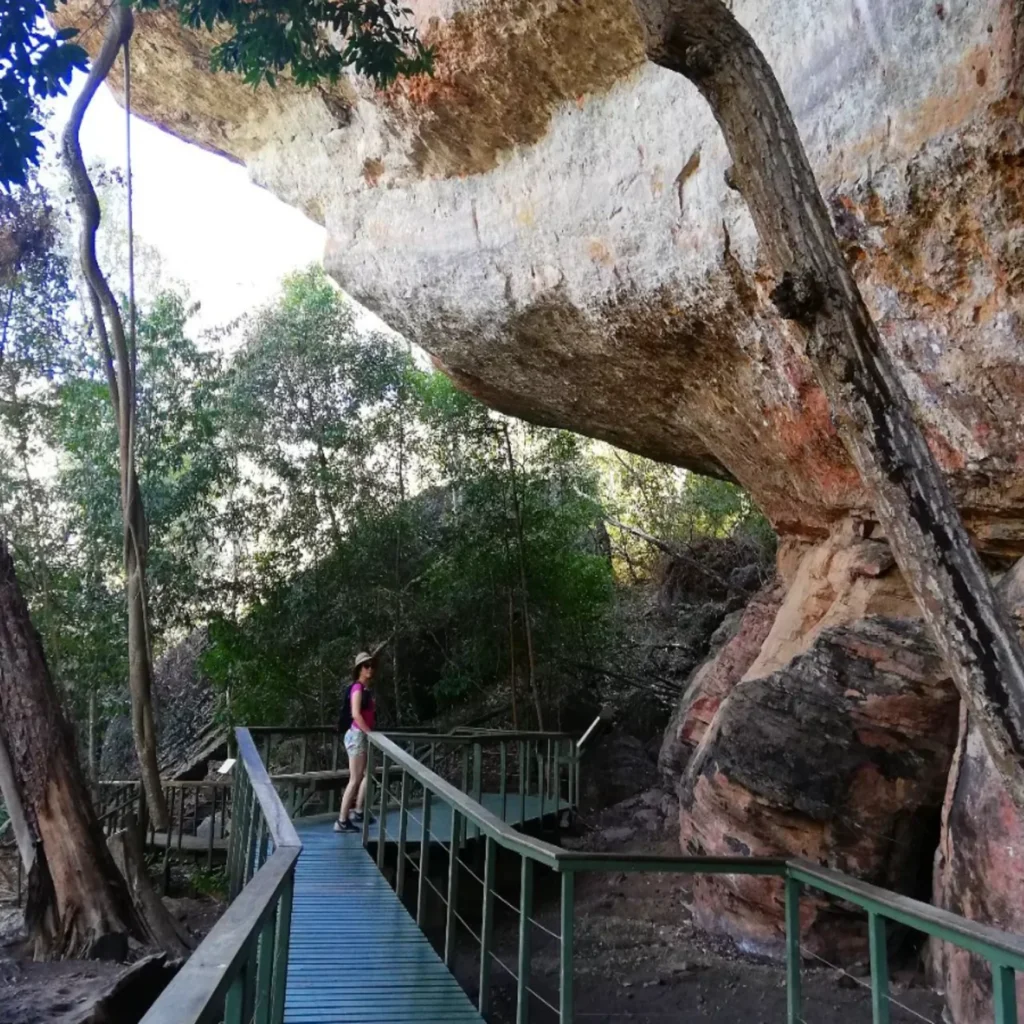
And seeing very, very elderly Japanese women on the rocks, helplessly examining the stones and not understanding how they could get out of there, I had to help! I am always amazed by the older people I meet abroad. I am already a pensioner, but I often see very old tourists who climb with the help of crutches to the idols of Easter Island or, like now, onto cliffs to the drawings of the locals. Nothing stops them from trying to see as many exciting things on this planet as possible at the end of their lives.
The Significance of Aboriginal Rock Art
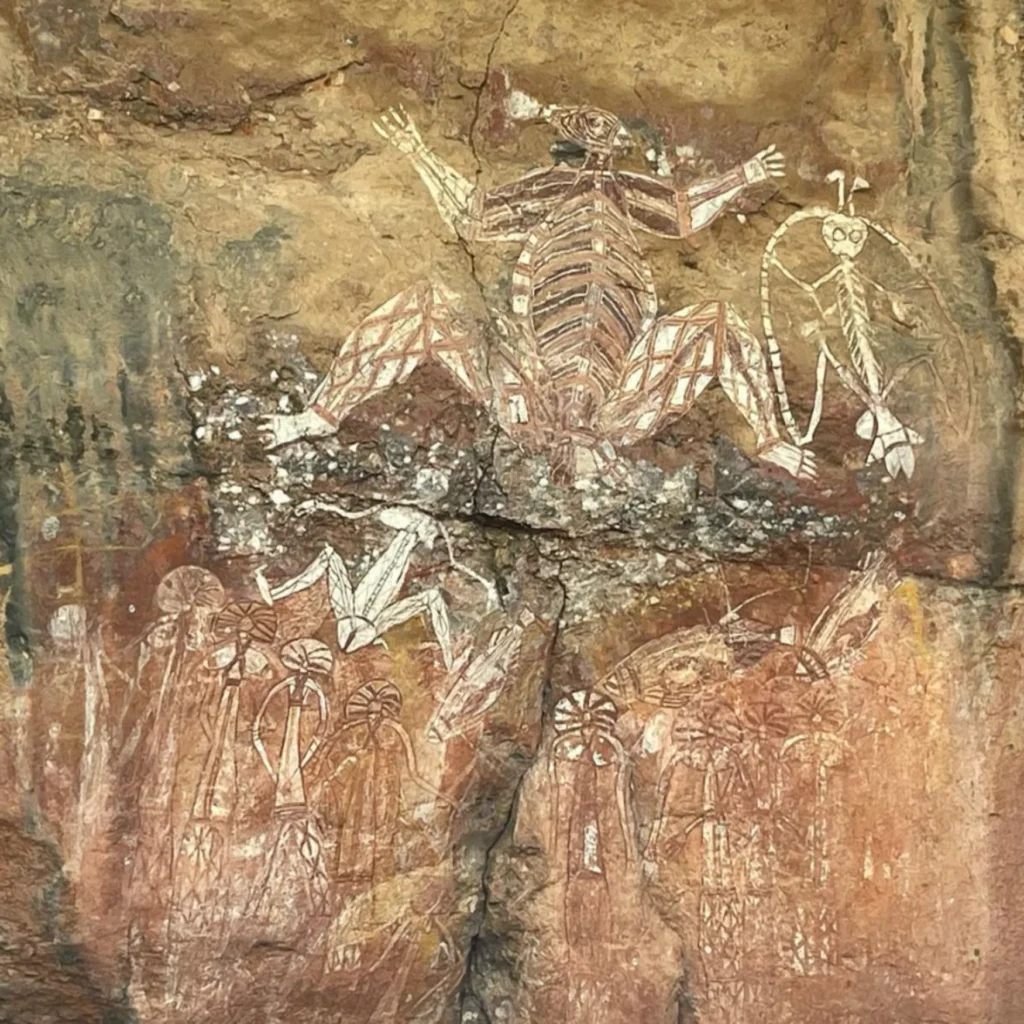
Local Aboriginal tribes seriously protect these paintings and do not allow any research to be done with them, which is why so little is known about this rock art. Although almost every drawing has a sign with a narrative of what is depicted, this has no scientific basis because no one knows what the ancient artist was trying to describe.
Efforts to Preserve Cultural Heritage
In June 1997, three elders and a young disciple from an Aboriginal community left their homeland of the Efforts to Preserve Cultural Heritage far north-west. They travelled to Europe to exhibit photographs of their holy rock paintings and explain what they meant. By their actions, which until recently were punishable by death, they are trying to deny access to their sacred places to livestock, which are driven here for grazing, mining companies, tourists and souvenir hunters.
Cultural Significance and Protection
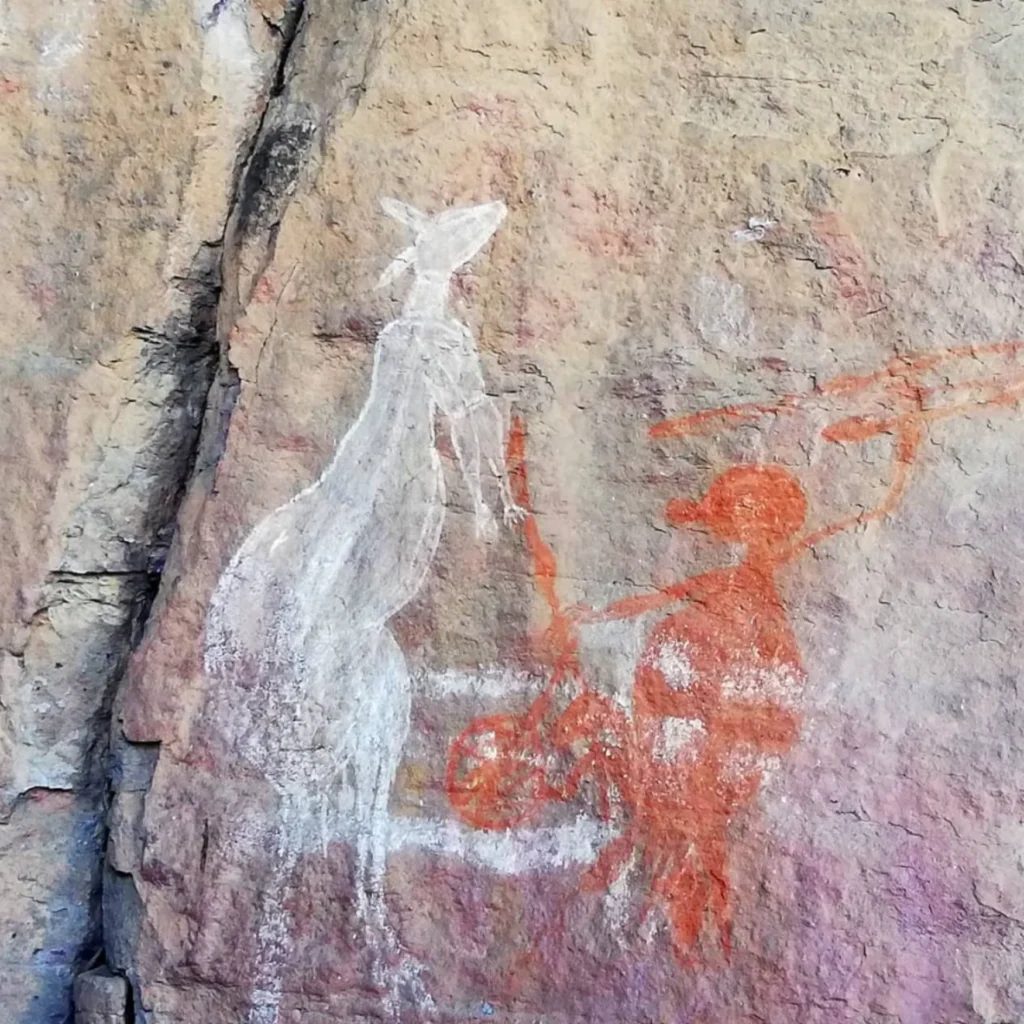
Rock art is a visual document for the locals, who never had their written language. This is a “written law” written in their terms. The white man’s law changes yearly, but these drawings never change. For example, the illustration of transferring an object from one person to another has never been modified, and it has always been there for the locals. For Aboriginal people, this is the force of law.
Unique Characteristics of Aboriginal Rock Art
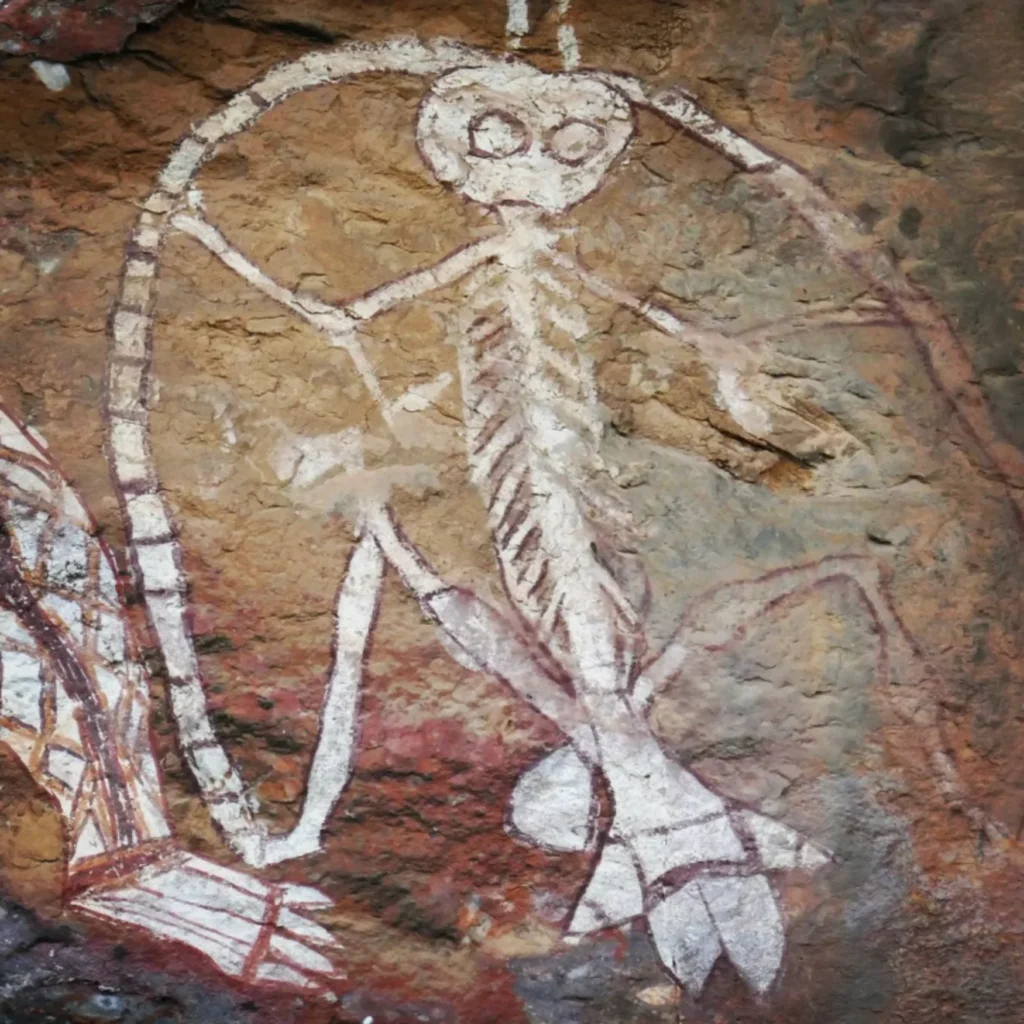
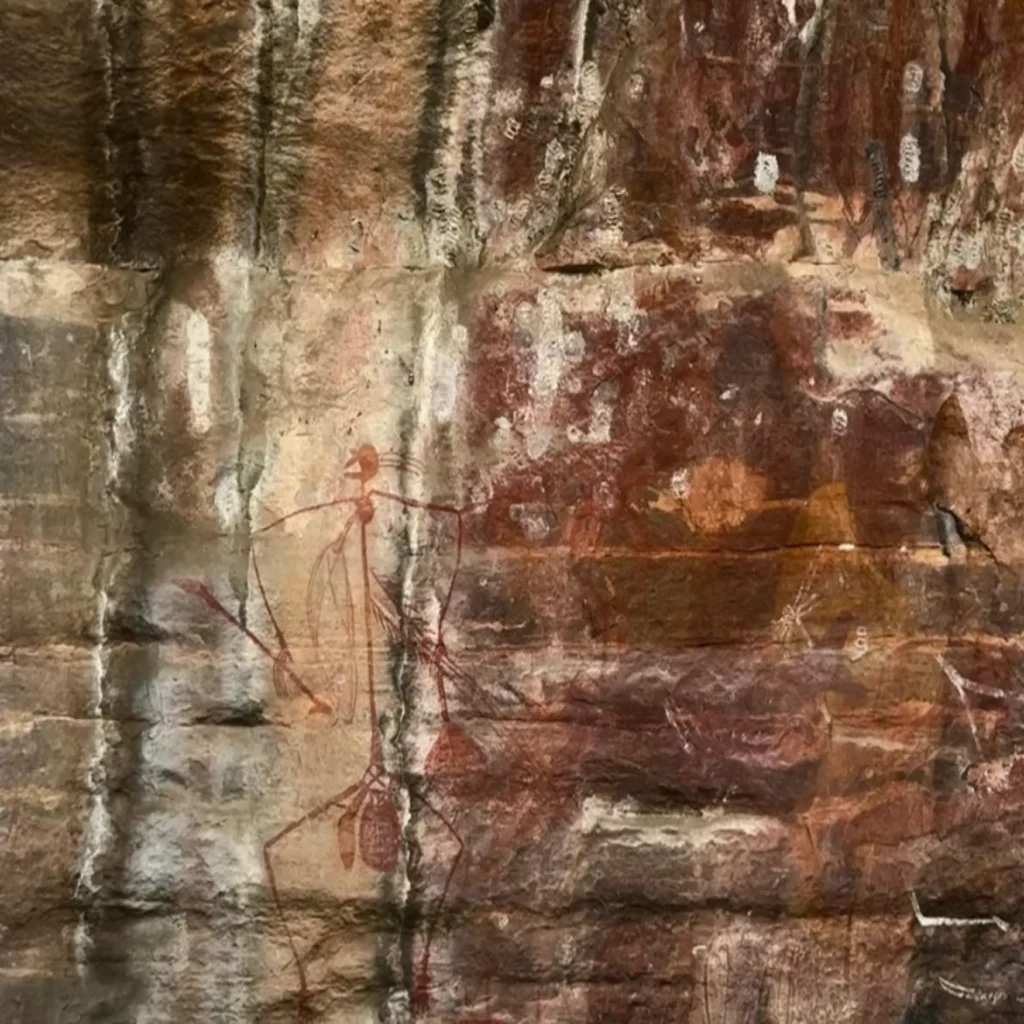
These drawings differ significantly from European Paleolithic paintings, primarily in their peculiar x-ray style with an adorable name – “Mimi”. On them, what is depicted is made in the form of a skeleton and internal organs, both animals and humans. The oldest drawings are fifty-three thousand years old, the oldest known examples of rock art on Earth. Still, it has not been possible to establish this entirely due to the local population’s taboo on research.
Threats to Cultural Heritage
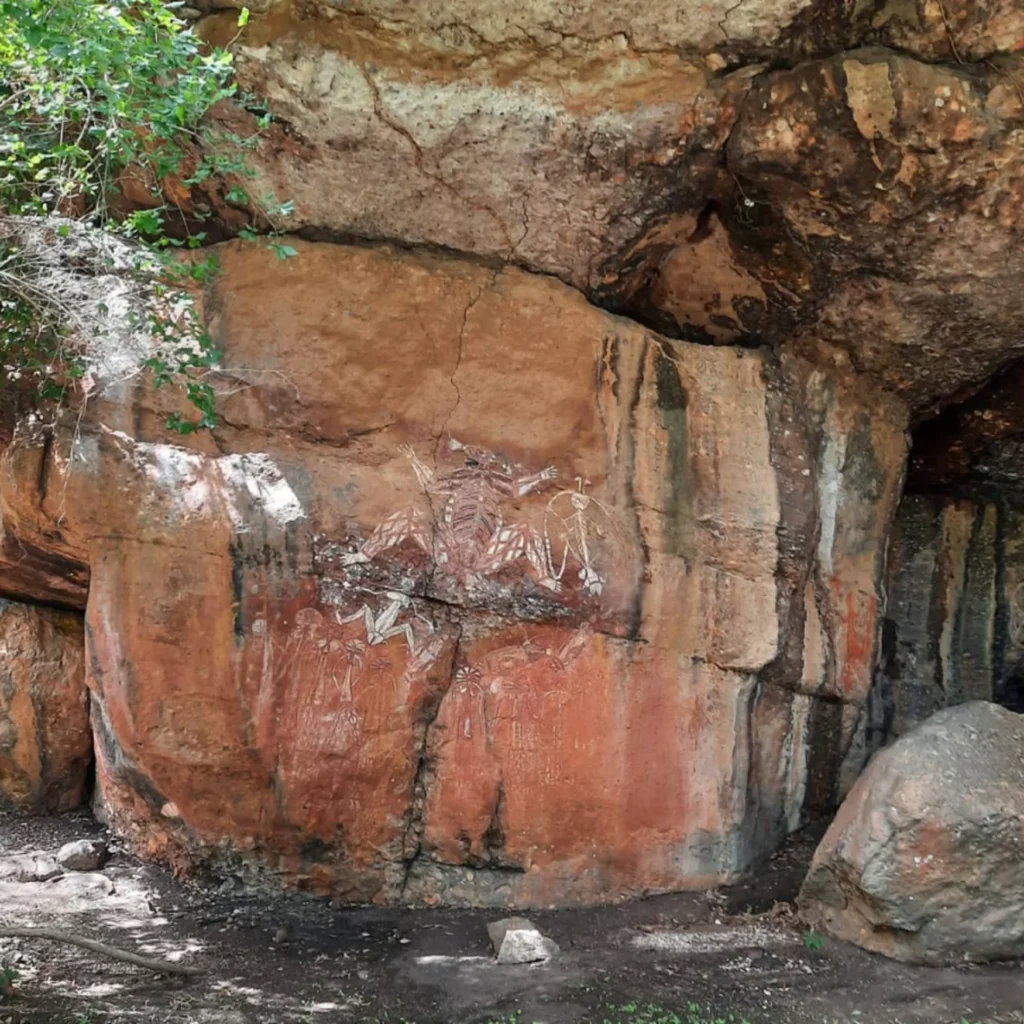
Although the complex of paintings on rocks and grotcaves, which we photographed at Kakadu National Park, is included in the World Cultural Heritage List, their safety is constantly threatened by nature (forest fires, erosion) and tourists visiting them. In 2013, the Australian company Maptek began work on a large-scale project—scanning Aboriginal rock paintings in Kakadu Park to preserve this information.
Interpretation and Challenges
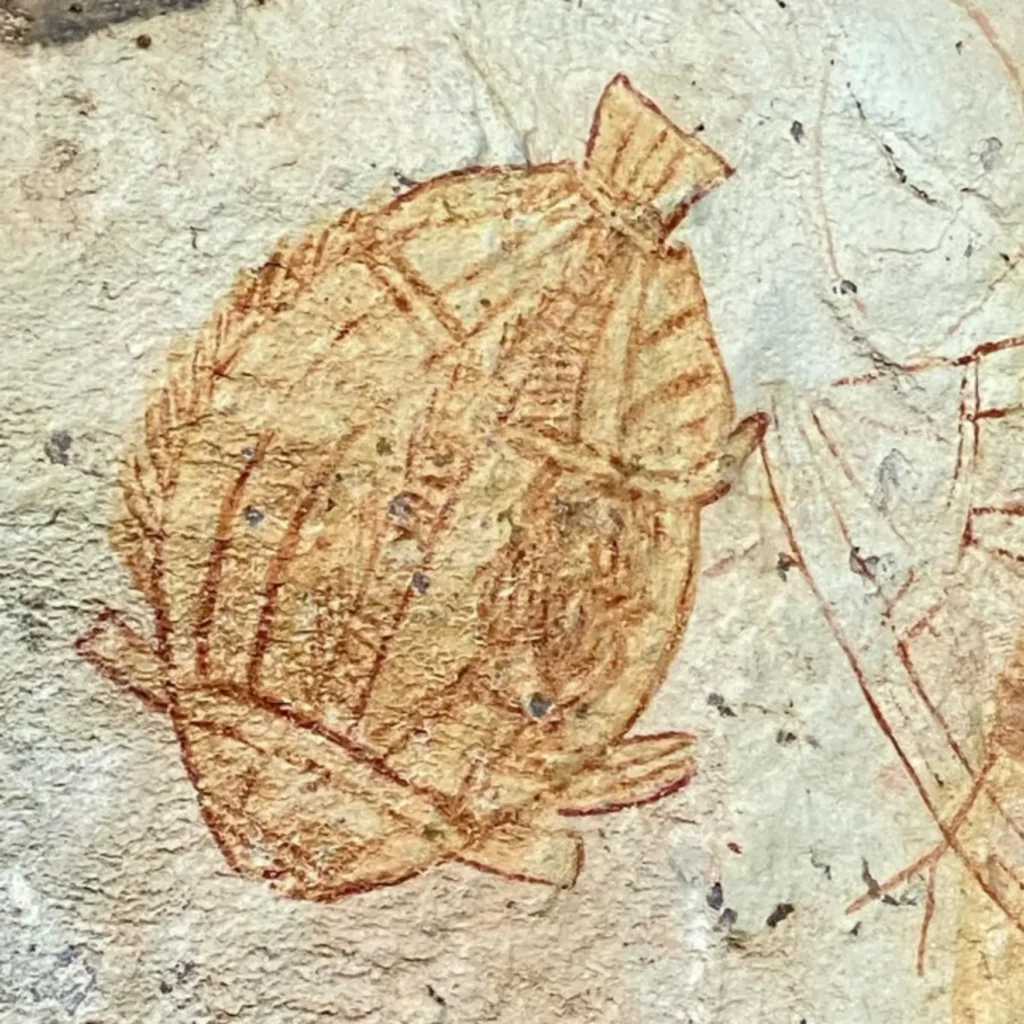
If you try to describe what is happening, captured in the rock paintings, using the description in English on the nearby tablet, you will get something like this.
Interactions with Indigenous Communities
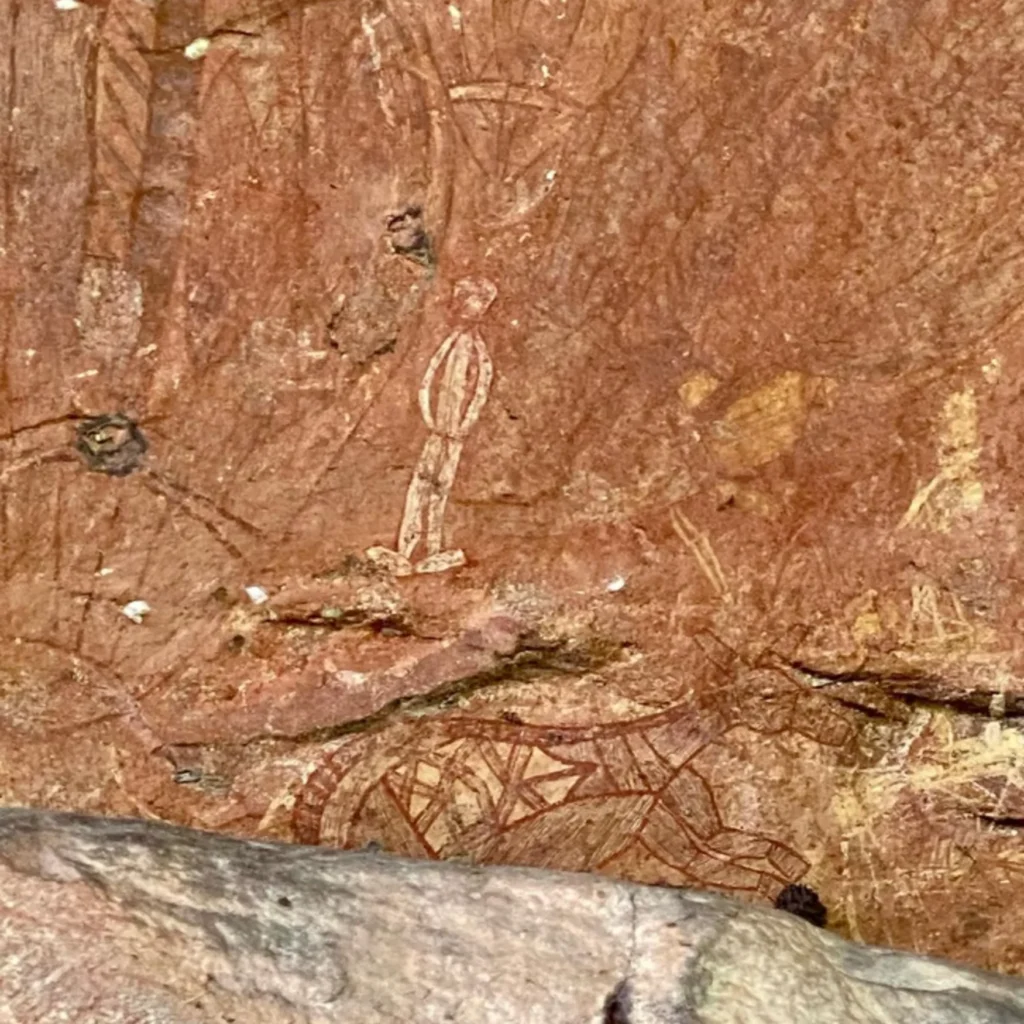
According to my observations, the locals are generally not very friendly towards the “white” population, although this is understandable. What the colonists did here is comparable to Nazism at its worst. It was only in 1970 that the government stopped taking children away from Aboriginal people under the slogan “Assimilation of Aboriginal Australians.” These children were even called the “stolen generation.”
Cautionary Note for Travelers
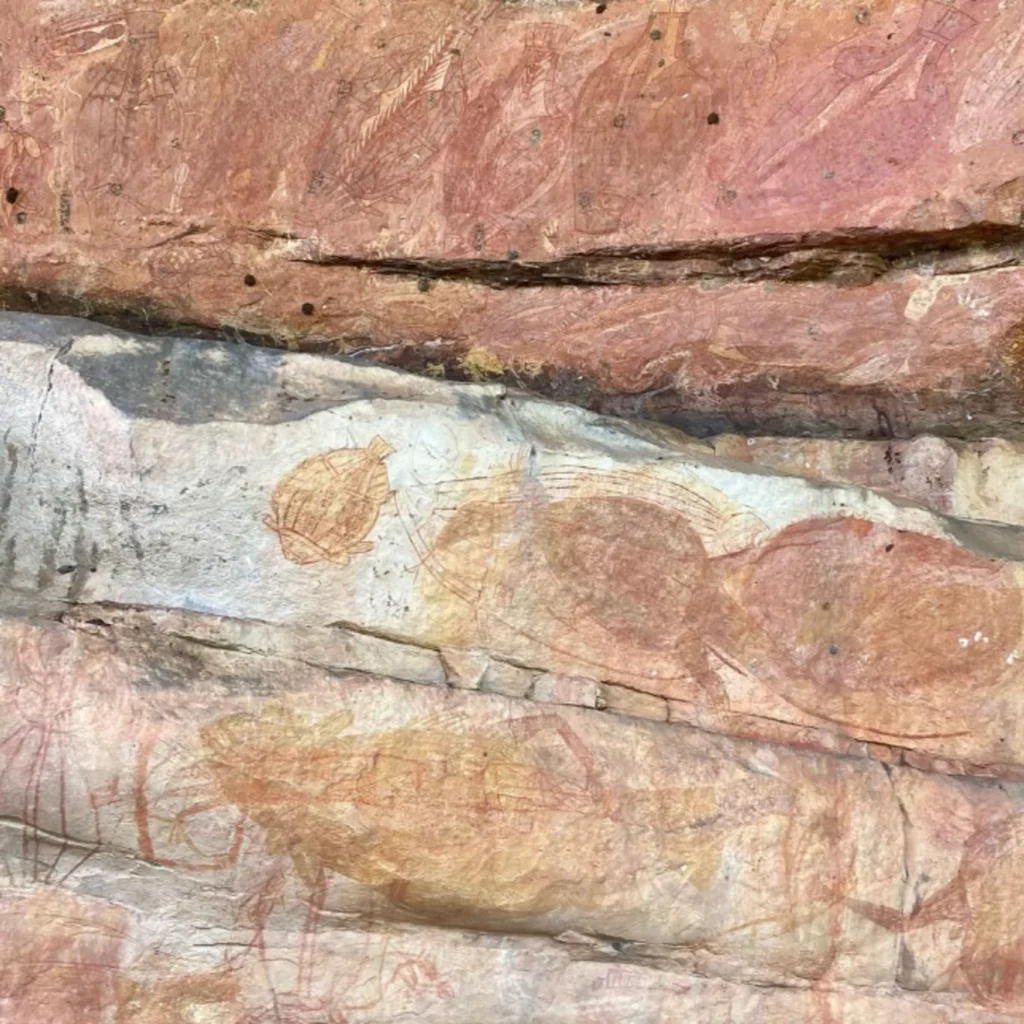
I want to warn travellers who wish to contact the local aborigines without having guides (rangers) accompanying them. Australian aborigines have powerful magic, which allows them to achieve the desired effect without using anything belonging to a person (while usually, a person’s best is a kind of conductor for influencing a person). For this purpose, special chants are used, and the sorcerer’s thoughts are concentrated on the person being influenced. The sorcerer can even sing death to a person in this way. For many, Australian magic is a way to solve the problem of not having access to things related to the object. Is she strong? Yes! However, the scientists need help explaining what its action is based on. Therefore, be careful!
One of the great option to see all Australian aborigines art is to Join us for an unforgettable journey into the heart of Australia’s largest national park, Kakadu. Known for its rich biodiversity, stunning landscapes, and deep cultural heritage, Kakadu is a place that offers more than just a sightseeing experience—it offers a connection to the land and its history. If you are planning visit Northern Territory join 3 day Kakadu tours from Darwin for an unforgettable journey into the heart of Australia’s largest national park, Kakadu.
FAQs About Kakadu’s Ancient Aboriginal Rock Art
What is Kakadu’s rock art?
Kakadu’s rock art is one of the highlights of the park, featuring thousands of paintings on rock walls that have been created by Aboriginal people over thousands of years. These artworks are a significant cultural and historical record, offering insights into the lives, beliefs, and environments of the park’s ancient inhabitants.
Where can I see rock art in Kakadu?
The most famous rock art sites in Kakadu are at Nourlangie and Ubirr. These sites have public access and feature walkways and viewing platforms that allow you to see the art up close without damaging the fragile sites.
How old is the rock art in Kakadu?
The rock art in Kakadu ranges in age, with some paintings estimated to be up to 20,000 years old. The styles and subjects of the art have evolved over centuries, reflecting changes in the environment, culture, and technology of the Aboriginal people.
What do the paintings represent?
The rock art in Kakadu includes images of local animals, such as barramundi and kangaroos, as well as figures that represent ancestral beings and stories from Aboriginal mythology. Some paintings are thought to have been used for teaching about hunting techniques and food sources, while others are spiritual in nature.
Can I take photos of the rock art?
Photography is allowed at most rock art sites, but flash photography is prohibited to prevent damage to the ancient pigments. Always follow park guidelines and respect the cultural significance of these sites.
Are there guided tours available?
Yes, there are guided Kakadu tours available which can enhance your understanding of the rock art. These tours are led by knowledgeable guides, often including local Aboriginal people who can provide deeper insights into the cultural and historical contexts of the artworks.
Is there an entry fee for visiting these sites?
Access to rock art sites like Nourlangie and Ubirr is included in the Kakadu National Park pass, which covers entry to the park and its various attractions. Make sure to purchase your pass from official outlets or online before visiting.
How should I behave at rock art sites?
It is important to treat rock art sites with respect as they are sacred to the local Aboriginal people. Do not touch the rock paintings, stay on marked paths, and follow all signs and guidelines provided at the site.
How many days I have to spend to see all Aboriginal arts?
Darwin to Kakadu day trip more then enough to see all Aboriginal arts.